

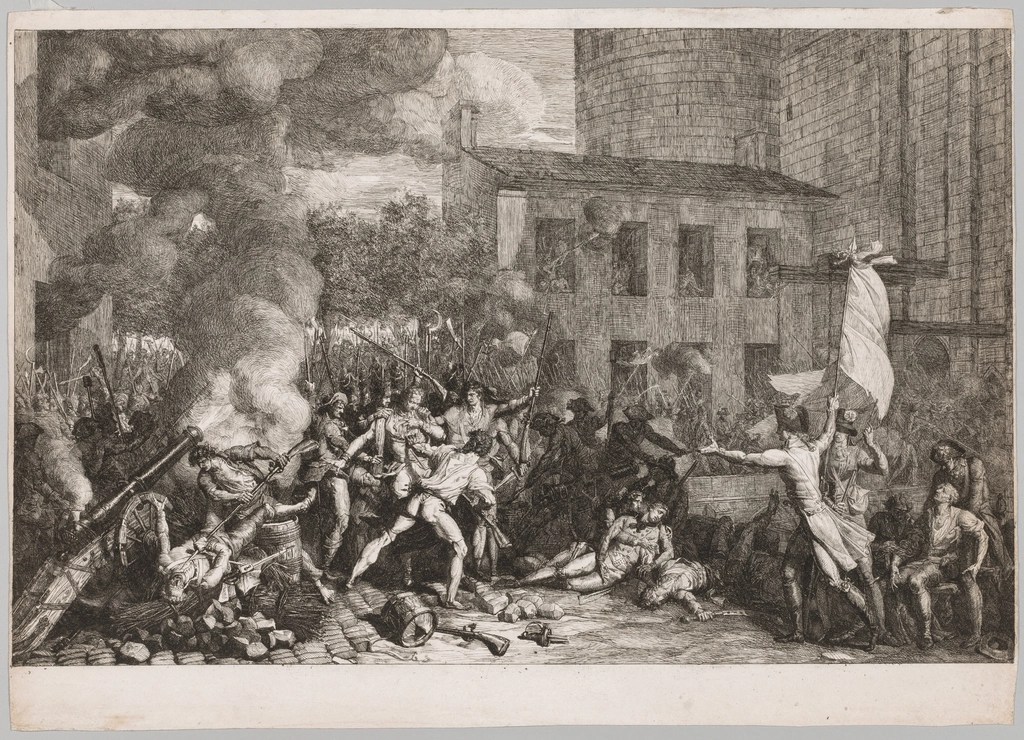
As France erupts in civil unrest and the symbols of luxury become targets of destruction, a remarkable planetary configuration recalls the revolutionary events of 1789.
On October 17, 2026, violence swept through the streets of France. Barricades burned, police struggled to contain the disorder, and some of the country’s most prestigious luxury boutiques were looted. In Paris, the windows of Kenzo and Celine were smashed, their carefully arranged interiors exposed to the chaos of the streets.
It was a striking image: the extraordinary wealth and refinement for which France is celebrated confronted by the anger, frustration and opportunism of a society in turmoil.
Yet beyond the immediate political and economic circumstances, the events invite another consideration.
In the heavens, a remarkable planetary configuration was unfolding—one that reaches back to the French Revolution itself.
Pluto has returned to Aquarius, the sign it occupied when the Bastille fell in 1789. But the connection is considerably more precise than a planetary return to the same zodiacal sign.
On July 14, 1789, Venus and Uranus were conjunct at approximately 4° Leo. On October 17, 2026, Venus was retrograde at 4° Scorpio, forming a nearly exact square to that revolutionary conjunction, while Pluto at 3° Aquarius stood in opposition.
The symbolism is extraordinary.
The Revolution and the Meaning of Luxury
When the people of Paris stormed the Bastille on July 14, 1789, the event became an enduring symbol of rebellion against arbitrary authority and inherited privilege.
France was suffering from financial crisis, mounting public debt, food shortages and a deeply unequal social order. The aristocracy enjoyed exemptions and privileges unavailable to much of the population, while the monarchy remained associated with spectacular displays of wealth.
The Revolution would challenge not only the institutions of government but the cultural language through which power expressed itself.
Clothing, in particular, acquired a new significance.
The elaborate silks, ornamentation and aristocratic fashions of the ancien régime became symbols of a social hierarchy increasingly under attack. Revolutionary dress, including the plain clothing associated with the sans-culottes, expressed an alternative political identity.
Fashion was no longer merely decorative. It became a declaration of allegiance, an expression of social position and a visible challenge to inherited authority.
And on the day the Bastille fell, Venus and Uranus stood together in Leo.
Venus, the planet of beauty, artistic expression, wealth and material value, was united with Uranus, the planet associated with disruption, emancipation and the overthrow of convention.
Leo, meanwhile, is the sign of royalty, distinction, prestige and the sovereign individual.
In mundane astrology, the conjunction offers a remarkably evocative image of the revolutionary challenge to aristocratic privilege.
Beauty, wealth and status were becoming inseparable from the struggle over who possessed power—and whether that power remained legitimate.
More than two centuries later, this same planetary conjunction is being activated again.
Venus, Uranus and Pluto: A Revolutionary Echo
On October 17, 2026, Venus was retrograde in Scorpio, almost exactly square the Venus–Uranus conjunction of July 14, 1789.
The degree correspondence is striking.
Venus occupied approximately 4°36′ Scorpio, while the revolutionary Venus and Uranus were positioned around 4°28′ and 4°22′ Leo, respectively.
At the same time, Pluto, now at approximately 3° Aquarius, opposed both planets in the historical chart.
These are not simply broad zodiacal similarities. They are close angular contacts involving planets whose symbolism speaks directly to questions of wealth, ownership, privilege and the disruption of established power.
Venus governs what a society cherishes, possesses and considers beautiful or valuable.
Uranus challenges the accepted order, breaking through structures that have become restrictive or obsolete.
Pluto exposes the deeper dynamics of power: who possesses it, how it is maintained and what happens when its foundations begin to shift.
The historical conjunction in Leo describes, symbolically, a confrontation with the privileges of royalty and the ruling classes.
In October 2026, Venus in Scorpio introduces questions of financial power, possession and the unequal distribution of resources. Pluto’s opposition from Aquarius places those questions within the larger relationship between institutions and the collective.
The correspondence becomes particularly compelling when considered against the events unfolding in France.
During nationwide demonstrations rooted in frustration over living costs, public services and economic conditions, luxury fashion establishments became targets of looting.
The violence cannot be attributed to a single motivation, nor should criminal destruction be confused with the legitimate grievances of peaceful demonstrators. Yet the imagery is unmistakable.
The symbols of material privilege had become caught in a larger confrontation over economic and social conditions.
In 1789, the aristocratic world of luxury was confronted by revolution. In 2026, the houses of modern luxury found themselves exposed to another eruption of collective unrest.
The historical circumstances are fundamentally different. The symbolic correspondence, however, is difficult to ignore.
Pluto in Aquarius and the Transformation of Power
Pluto’s return to Aquarius introduces the larger historical dimension.
Its previous passage through the sign coincided with the age of the American and French Revolutions, when established concepts of political legitimacy, individual rights and sovereign authority were subjected to profound challenges.
Aquarius concerns the relationship between individuals and the collective. It speaks to ideals of freedom, equality, social organization and the structures through which people participate in society.
Pluto brings to these themes an intensity that can expose the contradictions within established institutions.
Where power has become excessively concentrated, questions of legitimacy emerge. Where ideals of equality coexist with visible disparities of wealth and influence, social tensions can sharpen.
This does not mean that Pluto in Aquarius necessarily produces revolution. No planetary placement dictates political outcomes.
Rather, its symbolism provides a framework for examining periods in which collective expectations and established structures of authority appear to be undergoing fundamental reassessment.
The events in France take place against that larger astrological background.
But there is another, more immediate correspondence.
On October 17, Saturn at approximately 10° Aries stood conjunct the Moon’s position of approximately 11° Aries in the Bastille chart.
In mundane astrology, the Moon represents the people, their conditions and their collective experience. Saturn represents restriction, institutions, authority and the burdens imposed by necessity.
The contact introduces another layer to the historical comparison: the relationship between the population and the weight of established political and economic structures.
Meanwhile, Mercury in Scorpio formed a remarkably close square to the historical position of Pluto at approximately 18° Aquarius.
Mercury governs communication, ideas and the circulation of information. Its contact with revolutionary Pluto evokes the power of political narratives, contested truths and the transmission of ideas capable of challenging established assumptions.
Together, these contacts suggest an unusually concentrated activation of the historical chart.
Revolution in the Age of Information
The contemporary sky also presents a configuration absent from the revolutionary moment of 1789.
Uranus is now in Gemini, forming a trine to Pluto in Aquarius, while Neptune in Aries contributes to a broader pattern involving all three outer planets.
This configuration invites reflection on the changing mechanisms through which collective movements emerge and acquire influence.
In eighteenth-century France, revolutionary ideas circulated through pamphlets, newspapers, political clubs and public assemblies.
Today, social networks can organize demonstrations, transmit images and intensify public sentiment almost instantaneously.
The medium has changed, but the relationship between communication and social transformation remains.
Uranus in Gemini symbolizes the disruption of established systems of information and exchange. Pluto in Aquarius suggests a transformation in how collective power is organized and exercised.
Neptune in Aries adds a further dimension: the emergence of competing ideals and identities, together with the possibility that collective aspirations may inspire or mislead.
The result is a planetary configuration rich in symbolism concerning the relationship between individual action, technological networks and collective movements.
It is not difficult to see why these themes resonate with the present political atmosphere.
When Beauty Becomes Political
Perhaps the most revealing feature of the French unrest is the role occupied by luxury itself.
France’s great fashion houses represent extraordinary artistic achievement. They embody generations of craftsmanship, imagination, technical excellence and cultural influence.
Their creations are not simply commodities. At their finest, they are expressions of an artistic tradition that has shaped the world’s understanding of beauty.
Yet luxury has always possessed a dual character.
It can express the highest possibilities of creative achievement while simultaneously serving as a visible distinction between those who possess exceptional wealth and those who do not.
Venus encompasses both dimensions.
She represents beauty and artistry, but also possessions, wealth and the values through which material objects acquire significance.
Pluto introduces the underlying question of power.
Who determines value? Who controls the resources that confer prestige? And what happens when established symbols of wealth become objects of resentment?
These are not new questions.
They were woven into the social fabric of eighteenth-century France, when aristocratic fashion became inseparable from the political identity of the ruling classes.
They remain relevant in a world where luxury conglomerates command enormous financial influence and their products function as internationally recognized symbols of wealth.
The destruction of a boutique is not itself an act of social transformation. It can also devastate livelihoods, damage artistic creations and harm people who have no control over the institutions being challenged.
Nevertheless, when luxury establishments become prominent scenes of violence amid widespread economic discontent, the symbolic relationship between wealth and social power becomes impossible to overlook.
The Venus–Uranus–Pluto configuration offers an unusually precise astrological language for exploring that relationship.
The Return of an Unfinished Question
Pluto has not yet completed its return to the position it occupied when the Bastille fell.
On July 14, 1789, Pluto was at approximately 18°35′ Aquarius. Its return to that degree belongs to the next decade.
The current period therefore represents an earlier stage in a much longer planetary cycle.
Yet the October 2026 contacts to the revolutionary Venus–Uranus conjunction are compelling in their own right.
Nearly two and a half centuries separate the storming of the Bastille from the present unrest in France.
The monarchy has disappeared. Political institutions have been transformed. The aristocratic world that once defined the nation’s social hierarchy has given way to an entirely different economic and cultural order.
And still, certain questions endure.
Who possesses power?
What gives wealth its legitimacy?
How does a society reconcile the creation of extraordinary beauty with the economic inequalities that may surround it?
And at what point do the symbols of privilege cease to inspire admiration and begin to provoke resentment?
The historical charts do not provide answers to these questions. Nor do they establish that the present unrest will culminate in another revolution.
What they reveal, within the symbolic language of astrology, is an intriguing recurrence of planetary relationships at moments when France is confronting tensions surrounding authority, wealth and social order.
There is something especially poignant in the involvement of Venus.
For beneath the political conflict lies a question of values: what a society considers worthy of admiration, protection and preservation.
The French Revolution transformed the meaning of privilege and, with it, the cultural expression of beauty and status.
Whether the present era will bring changes of comparable significance remains unknown.
But the planetary correspondence asks us to consider whether the deepest transformations of an age begin not simply when institutions are challenged, but when the values sustaining those institutions are called into question.
Perhaps that is the enduring message of Venus, Uranus and Pluto: when the meaning of value changes, the meaning of power cannot remain untouched.
Sources & References
Le Monde (October 18, 2026). October 17 French protests: Crowds marched through the streets before violence, looting and chaos broke out
Agence France-Presse (AFP) (October 17, 2026). Clashes, blazes and wide-scale looting grip France on day of protests
Astrodienst — Swiss Ephemeris. Historical and contemporary planetary positions


Leave a Reply